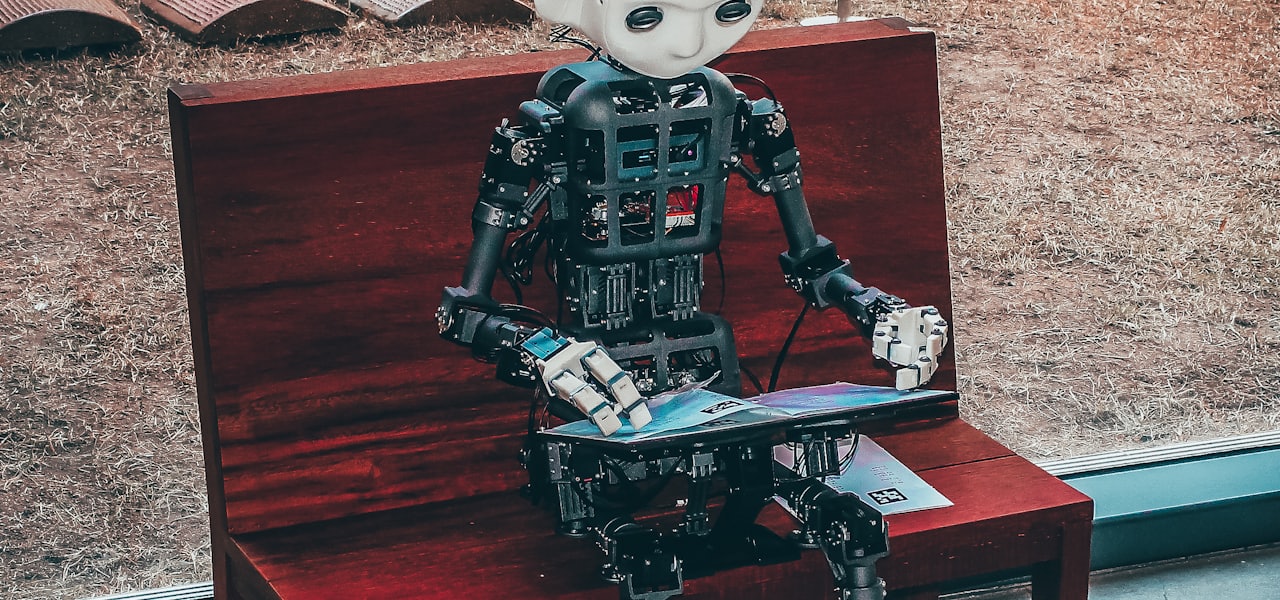
VibeOS is an operating system built from scratch entirely by generative artificial intelligence, using code produced through prompts to Claude (vibe coding). It is capable of running on QEMU and was successfully tested on a Raspberry Pi Zero. It has been released under the MIT license. == Features == === Core === Custom kernel with cooperative multitasking (preemptive backup) FAT32 filesystem with long filename support Memory allocator, process scheduler, interrupt handling GIC-400 (QEMU) and BCM2836/BCM2835 (Pi) interrupt controllers Configurable boot (splash screen, boot target) === GUI === Desktop environment with draggable windows Menu bar, dock, window minimize/maximize/close Mouse and keyboard input Modern macOS-inspired aesthetic === Networking === Full TCP/IP stack (Ethernet, ARP, IP, ICMP, UDP, TCP) DNS resolver HTTP client TLS 1.2 with HTTPS support === Apps === Web browser with HTML/CSS rendering Terminal emulator with readline-style shell Text editor (vim clone) with syntax highlighting File manager with drag-and-drop Music player (MP3/WAV) Calculator, system monitor VibeCode IDE Doom port === Development === TCC (Tiny C Compiler) - compile C programs directly on VibeOS MicroPython interpreter with full kernel API bindings 60+ userspace programs (coreutils, games, GUI apps) === Hardware === Runs on Raspberry Pi Zero 2W USB keyboard and mouse via DWC2 driver SD card via EMMC driver 1920×1080 framebuffer == Further projects == There are other independent projects under the VibeOS name, including an independent development by Ben, also developed using vibe coding, aimed at creating a Unix-like operating system for educational purposes. Another project is Vib-OS, an operating system also built using vibe coding, capable of booting on a Raspberry Pi. It offers a desktop environment with a customizable wallpaper, a file manager, and a web browser currently in an early stage of development, a functional Doom port, among other features that are not very polished given the state of development.
Cyber attribution
In the area of computer security, cyber attribution is an attribution of cybercrime, i.e., finding who perpetrated a cyberattack. Uncovering a perpetrator may give insights into various security issues, such as infiltration methods, communication channels, etc., and may help in enacting specific countermeasures. Cyber attribution is a costly endeavor requiring considerable resources and expertise in cyber forensic analysis. For governments and other major players dealing with cybercrime would require not only technical solutions, but legal and political ones as well, and for the latter ones cyber attribution is crucial. Attributing a cyberattack is difficult, and of limited interest to companies that are targeted by cyberattacks. In contrast, secret services often have a compelling interest in finding out whether a state is behind the attack. A further challenge in attribution of cyberattacks is the possibility of a false flag attack, where the actual perpetrator makes it appear that someone else caused the attack. Every stage of the attack may leave artifacts, such as entries in log files, that can be used to help determine the attacker's goals and identity. In the aftermath of an attack, investigators often begin by saving as many artifacts as they can find, and then try to determine the attacker.
Full Dive
Full Dive, short for Full Dive: This Ultimate Next-Gen Full Dive RPG Is Even Shittier than Real Life! (Japanese: 究極進化したフルダイブRPGが現実よりもクソゲーだったら, Hepburn: Kyūkyoku Shinka shita Furu Daibu RPG ga Genjitsu yori mo Kusogē Dattara), is a Japanese light novel series written by Light Tuchihi and illustrated by Youta. Media Factory has published four volumes since August 2020 under their MF Bunko J imprint. A manga adaptation with art by Kino was serialized in Media Factory's seinen manga magazine Monthly Comic Alive from January 2021 to January 2022. An anime television series adaptation by ENGI aired from April to June 2021. == Plot == Hiroshi Yuki, with the player name of Hiro, is a high school boy who loves to play virtual reality MMORPGs (VRMMORPG) in order to escape reality. When a game store manager named Reona Kisaragi tricks him into buying the game Kiwame Quest, he soon discovers that it is not what it seems. Unlike regular games, it is a game that tries to pursue realism to a fanatical point. As such, Hiroshi struggles to eke out a niche. Despite the disadvantages, he is determined to complete the game. == Characters == === Main characters === Hiroshi Yuki (結城宏, Yūki Hiroshi) Voiced by: Daiki Yamashita, Riho Sugiyama (young) (Japanese); Johnny Yong Bosch, Michele Knotz (young) (English) Hiroshi is a high school student who is tricked into buying Kiwame Quest by game store manager, Reona Kisaragi. He is a former member of the track team who quit following an unfortunate incident and he likes to play VRMMORPGs in order to escape reality. His player name is Hiro. Reona Kisaragi (如月玲於奈, Kisaragi Reona) Voiced by: Ayana Taketatsu (Japanese); Natalie Van Sistine (English) Reona is a game store manager who tricks Hiroshi into buying Kiwame Quest. She likes to tease him and her in-game avatar is that of a fairy. Alicia (アリシア, Arishia) Voiced by: Fairouz Ai (Japanese); Kayli Mills (English) Alicia is one of Hiroshi's childhood friends in Kiwame Quest. She has an older brother named Martin in-game. Mizarisa (ミザリサ) Voiced by: Shiori Izawa (Japanese); Sarah Anne Williams (English) Mizarisa is the town inquisitor in Kiwame Quest. Kaede Yuki (結城楓, Yūki Kaede) Voiced by: Aoi Koga (Japanese); Kate Bristol (English) Kaede is Hiroshi's younger sister. She used to look up to her older brother, but their relationship has been strained ever since he quit the track team. === NPCs === Martin (マーチン, Māchin) Voiced by: Haruki Ishiya, Natsumi Fujiwara (young) (Japanese); Ben Lepley, Krystal LaPorte (young) (English) Martin is one of Hiroshi's childhood friends in Kiwame Quest. He is also Alicia's older brother in-game. Tesla (テスラ, Tesura) Voiced by: Satoshi Hino (Japanese); Jason Liebrecht (English) Tesla is the captain of the City Guard in Kiwame Quest. Govern (ガバン, Gaban) Voiced by: Shizuka Itō (Japanese); Lisa Ortiz (English) Govern is the queen of Ted in Kiwame Quest. === Other characters === Ginji (ギンジ) Voiced by: Katsuyuki Konishi (Japanese); Brent Mukai (English) Ginji is a veteran player of Kiwame Quest. Soichiro Kamui (神居宗一郎, Kamui Sōichirō) Voiced by: Yoshitsugu Matsuoka (Japanese); Samuel Drake (English) Kamui is the only known player who has successfully completed Kiwame Quest. == Media == === Light novels === Light Tuchihi launched the light novel series, with illustrations by Youta, under Media Factory's MF Bunko J label on August 25, 2020. ==== Volumes ==== === Manga === A manga adaptation by Kino was serialized in Media Factory's Monthly Comic Alive magazine from January 27, 2021, to January 27, 2022. Two tankōbon volumes were released from May 21, 2021, to January 21, 2022. ==== Volumes ==== === Anime === An anime television series adaptation was announced on December 4, 2020. The series was animated by ENGI and directed by Kazuya Miura, with Kenta Ihara writing the series' scripts, and Yūta Kevin Kenmotsu designing the characters. It ran from April 7 to June 23, 2021, on AT-X, Tokyo MX, SUN, KBS Kyoto, and BS11. Mayu Maeshima performed the opening theme "Answer", while Ayana Taketatsu, Fairouz Ai, Shiori Izawa, and Aoi Koga performed the ending theme "Kisuida!". It ran for 12 episodes. Funimation licensed and streamed the series. On June 8, 2021, Funimation announced that the series would receive an English dub, which premiered the following day. Following Sony's acquisition of Crunchyroll, the series was moved to Crunchyroll. ==== Episodes ====
Argument technology
Argument technology is a sub-field of collective intelligence and artificial intelligence that focuses on applying computational techniques to the creation, identification, analysis, navigation, evaluation and visualisation of arguments and debates. In the 1980s and 1990s, philosophical theories of arguments in general, and argumentation theory in particular, were leveraged to handle key computational challenges, such as modeling non-monotonic and defeasible reasoning and designing robust coordination protocols for multi-agent systems. At the same time, mechanisms for computing semantics of Argumentation frameworks were introduced as a way of providing a calculus of opposition for computing what it is reasonable to believe in the context of conflicting arguments. With these foundations in place, the area was kick-started by a workshop held in the Scottish Highlands in 2000, the result of which was a book coauthored by philosophers of argument, rhetoricians, legal scholars and AI researchers. Since then, the area has been supported by various dedicated events such as the International Workshop on Computational Models of Natural Argument (CMNA) which has run annually since 2001; the International Workshop on Argument in Multi Agent Systems (ArgMAS) annually since 2004; the Workshop on Argument Mining, annually since 2014, and the Conference on Computational Models of Argument (COMMA), biennially since 2006. Since 2010, the field has also had its own journal, Argument & Computation, which was published by Taylor & Francis until 2016 and since then by IOS Press. One of the challenges that argument technology faced was a lack of standardisation in the representation and underlying conception of argument in machine readable terms. Many different software tools for manual argument analysis, in particular, developed idiosyncratic and ad hoc ways of representing arguments which reflected differing underlying ways of conceiving of argumentative structure. This lack of standardisation also meant that there was no interchange between tools or between research projects, and little re-use of data resources that were often expensive to create. To tackle this problem, the Argument Interchange Format set out to establish a common standard that captured the minimal common features of argumentation which could then be extended in different settings. Since about 2018, argument technology has been growing rapidly, with, for example, IBM's Grand Challenge, Project Debater, results for which were published in Nature in March 2021; German research funder, DFG's nationwide research programme on Robust Argumentation Machines, RATIO, begun in 2019; and UK nationwide deployment of The Evidence Toolkit by the BBC in 2019. A 2021 video narrated by Stephen Fry provides a summary of the societal motivations for work in argument technology. Argument technology has applications in a variety of domains, including education, healthcare, policy making, political science, intelligence analysis and risk management and has a variety of sub-fields, methodologies and technologies. == Technologies == === Argument assistant === An argument assistant is a software tool which support users when writing arguments. Argument assistants can help users compose content, review content from one other, including in dialogical contexts. In addition to Web services, such functionalities can be provided through the plugin architectures of word processor software or those of Web browsers. Internet forums, for instance, can be greatly enhanced by such software tools and services. === Argument blogging === ArguBlogging is software which allows its users to select portions of hypertext on webpages in their Web browsers and to agree or disagree with the selected content, posting their arguments to their blogs with linked argument data. It is implemented as a bookmarklet, adding functionality to Web browsers and interoperating with blogging platforms such as Blogger and Tumblr. === Argument mapping === Argument maps are visual, diagrammatic representations of arguments. Such visual diagrams facilitate diagrammatic reasoning and promote one's ability to grasp and to make sense of information rapidly and readily. Argument maps can provide structured, semi-formal frameworks for representing arguments using interactive visual language. One avenue of research and development is the design of online platforms to leverage collective intelligence to populate such maps and to integrate data, optimize and assess arguments. === Argument mining === Argument mining, or argumentation mining, is a research area within the natural language processing field. The goal of argument mining is the automatic extraction and identification of argumentative structures from natural language text with the aid of computer programs. === Argument search === An argument search engine is a search engine that is given a topic as a user query and returns a list of arguments for and against the topic or about that topic. Such engines could be used to support informed decision-making or to help debaters prepare for debates. === Automated argumentative essay scoring === The goal of automated argumentative essay scoring systems is to assist students in improving their writing skills by measuring the quality of their argumentative content. === Debate technology === Debate technology focuses on human-machine interaction and in particular providing systems that support, monitor and engage in debate. One of the most high-profile examples of debating technology is IBM's Project Debater which combines scripted communication with very large-scale processing of news articles to identify and construct arguments on the fly in a competitive debating setting. Debating technology also encompasses tools aimed at providing insight into debates, typically using techniques from data science. These analytics have been developed in both academic and commercial settings. === Decision support system === Argument technology can reduce both individual and group biases and facilitate more accurate decisions. Argument-based decision support systems do so by helping users to distinguish between claims and the evidence supporting them, and express their confidence in and evaluate the strength of evidence of competing claims. They have been used to improve predictions of housing market trends, risk analysis, ethical and legal decision making. ==== Ethical decision support system ==== An ethical decision support system is a decision support system which supports users in moral reasoning and decision-making. ==== Legal decision support system ==== A legal decision support system is a decision support system which supports users in legal reasoning and decision-making. === Explainable artificial intelligence === An explainable or transparent artificial intelligence system is an artificial intelligence system whose actions can be easily understood by humans. === Intelligent tutoring system === An intelligent tutoring system is a computer system that aims to provide immediate and customized instruction or feedback to learners, usually without requiring intervention from a human teacher. The intersection of argument technology and intelligent tutoring systems includes computer systems which aim to provide instruction in: critical thinking, argumentation, ethics, law, mathematics, and philosophy. === Legal expert system === A legal expert system is a domain-specific expert system that uses artificial intelligence to emulate the decision-making abilities of a human expert in the field of law. === Machine ethics === Machine ethics is a part of the ethics of artificial intelligence concerned with the moral behavior of artificially intelligent beings. As humans argue with respect to morality and moral behavior, argument can be envisioned as a component of machine ethics systems and moral reasoning components. === Proof assistant === In computer science and mathematical logic, a proof assistant or interactive theorem prover is a software tool to assist with the development of formal proofs by human-machine collaboration. This involves some sort of interactive proof editor, or other interface, with which a human can guide the search for proofs, the details of which are stored in, and some steps provided by, a computer. === Ethical considerations === Ethical considerations of argument technology include privacy, transparency, societal concerns, and diversity in representation. These factors cut across different levels such as technology, user interface design, user, service context, and society. There is concern about unethical misuse for "generating arguments on controversial topics with specific stances and deploying them on social platforms". Another issue may concern the design of conclusion-making algorithms, such as e.g. enabling such to conclude that certain key data is needed instead of only making lists of best-fit conclusions or enabling the generation of multi
Statistical semantics
In linguistics, statistical semantics applies the methods of statistics to the problem of determining the meaning of words or phrases, ideally through unsupervised learning, to a degree of precision at least sufficient for the purpose of information retrieval. == History == The term statistical semantics was first used by Warren Weaver in his well-known paper on machine translation. He argued that word-sense disambiguation for machine translation should be based on the co-occurrence frequency of the context words near a given target word. The underlying assumption that "a word is characterized by the company it keeps" was advocated by J. R. Firth. This assumption is known in linguistics as the distributional hypothesis. Emile Delavenay defined statistical semantics as the "statistical study of the meanings of words and their frequency and order of recurrence". "Furnas et al. 1983" is frequently cited as a foundational contribution to statistical semantics. An early success in the field was latent semantic analysis. == Applications == Research in statistical semantics has resulted in a wide variety of algorithms that use the distributional hypothesis to discover many aspects of semantics, by applying statistical techniques to large corpora: Measuring the similarity in word meanings Measuring the similarity in word relations Modeling similarity-based generalization Discovering words with a given relation Classifying relations between words Extracting keywords from documents Measuring the cohesiveness of text Discovering the different senses of words Distinguishing the different senses of words Subcognitive aspects of words Distinguishing praise from criticism == Related fields == Statistical semantics focuses on the meanings of common words and the relations between common words, unlike text mining, which tends to focus on whole documents, document collections, or named entities (names of people, places, and organizations). Statistical semantics is a subfield of computational semantics, which is in turn a subfield of computational linguistics and natural language processing. Many of the applications of statistical semantics (listed above) can also be addressed by lexicon-based algorithms, instead of the corpus-based algorithms of statistical semantics. One advantage of corpus-based algorithms is that they are typically not as labour-intensive as lexicon-based algorithms. Another advantage is that they are usually easier to adapt to new languages or noisier new text types from e.g. social media than lexicon-based algorithms are. However, the best performance on an application is often achieved by combining the two approaches.
Microsoft Whiteboard
Microsoft Whiteboard is a free multi-platform application, as well as an online service and a feature in Microsoft Teams, which simulates a virtual whiteboard and enables real-time collaboration between users. == Overview and features == Microsoft Whiteboard allows users to draw on a virtual whiteboard using input methods such as a stylus pen or a mouse and keyboard, and write down notes, draw connections between shareable ideas, and interact in real time. Microsoft Whiteboard is available to download on the following platforms and devices: Microsoft Windows (on Windows 10 or above) Android Apple iOS Surface Hub devices It is also available on the web and as a feature in Microsoft Teams. Microsoft Whiteboard allows users with Microsoft accounts to view, edit, and share whiteboards using the provided tools and options. The feature set includes tools for drawing, shapes, and media. Drawing in Microsoft Whiteboard is called inking. It works both on mobile devices and computers. The inking toolbar has customizable pencils, a ruler, a highlighter, an eraser, and an object selector. Whiteboard can recognize shapes drawn by hand and straighten them. Holding the Shift key on a computer while inking draws straight lines. Microsoft Whiteboard has keyboard shortcuts for some functions. Additional features include inserting sticky notes, text boxes, stickers, as well as images. Grid lines and colors are adjustable. Different templates can be inserted into the whiteboard. Users can also share their reactions. A feature limited to boards created in Microsoft Teams, is the ability to make them read-only; other participants from the meeting cannot edit them. == Reviews == PC Magazine gave Microsoft Whiteboard a score of 3.5 out of 5, praising the app's free availability and plentiful templates. It compared it to other, paid whiteboarding solutions, and concluded that Microsoft offers the best free one. Some of the cons, described by PCMag, include the inability to view boards without a Microsoft account and the inability to create custom templates.
The 100 (TV series)
The 100 (pronounced "The Hundred" ) is an American post-apocalyptic science fiction drama television series that premiered on March 19, 2014, on the CW network, and ended on September 30, 2020. Developed by Jason Rothenberg, the series is based on the young adult novel series The 100 by Kass Morgan. The 100 follows descendants of post-apocalyptic survivors from a space habitat, the Ark, who return to Earth nearly a century after a devastating nuclear apocalypse; the first people sent to Earth are a group of juvenile delinquents who encounter another group of survivors on the ground. The juvenile delinquents include Clarke Griffin (Eliza Taylor), Finn Collins (Thomas McDonell), Bellamy Blake (Bob Morley), Octavia Blake (Marie Avgeropoulos), Jasper Jordan (Devon Bostick), Monty Green (Christopher Larkin), and John Murphy (Richard Harmon). Other lead characters include Clarke's mother Dr. Abby Griffin (Paige Turco), Marcus Kane (Henry Ian Cusick), and Chancellor Thelonious Jaha (Isaiah Washington), all of whom are council members on the Ark, and Raven Reyes (Lindsey Morgan), a mechanic aboard the Ark. == Plot == Ninety-seven years after a devastating nuclear apocalypse wipes out most human life on Earth, thousands of people now live in a space station orbiting Earth, which they call the Ark. Three generations have been born in space, but when life-support systems on the Ark begin to fail, one hundred juvenile detainees are sent to Earth in a last attempt to determine whether it is habitable, or at least save resources for the remaining residents of the Ark. They discover that some humans survived the apocalypse: the Grounders, who live in clans locked in a power struggle; the Reapers, another group of grounders who have been turned into cannibals by the Mountain Men; and the Mountain Men, who live in Mount Weather, descended from those who locked themselves away before the apocalypse. Under the leadership of Clarke and Bellamy, the juveniles attempt to survive the harsh surface conditions, battle hostile grounders and establish communication with the Ark. In the second season, the survivors face a new threat from the Mountain Men, who harvest their bone marrow to survive the radiation. Clarke and the others form a fragile alliance with the grounders to rescue their people. The season ends with Clarke making a devastating choice to save them all. In season three, power struggles erupt between the Arkadians and the grounders after a controversial new leader takes charge. Meanwhile, an AI named A.L.I.E., responsible for the original apocalypse, begins taking control of people’s minds. Clarke destroys A.L.I.E. but learns another disaster is imminent. In the fourth season, nuclear reactors are melting down, threatening to wipe out life again. Clarke and her friends search for ways to survive, including experimenting with radiation-resistant blood and finding an underground bunker. As time runs out, only a select few are able to take shelter. The fifth season picks up six years later, when Earth is left largely uninhabitable except for one green valley, where new enemies arrive. Clarke protects her adopted daughter Madi while former survivors return from space and underground, triggering another war. The battle ends with the valley destroyed and the group entering cryosleep to find a new home. In season six, the group awakens 125 years later on a new planet called Sanctum, ruled by powerful families known as the Primes. Clarke fights to stop body-snatching rituals and protect her people from new threats, including a rebel group and a dangerous AI influence. The season ends with major losses and the destruction of the Primes' rule. In the seventh and final season, the survivors face unrest on Sanctum and clash with a mysterious group called the Disciples, who believe Clarke is key to saving humanity. A wormhole network reveals multiple planets and a final "test" that determines the fate of the species. Most transcend into a higher consciousness, but Clarke and a few others choose to live out their lives on a reborn Earth. == Cast and characters == Eliza Taylor as Clarke Griffin Paige Turco as Abigail "Abby" Griffin (seasons 1–6; guest season 7) Thomas McDonell as Finn Collins (seasons 1–2) Eli Goree as Wells Jaha (season 1; guest season 2) Marie Avgeropoulos as Octavia Blake Bob Morley as Bellamy Blake Kelly Hu as Callie "Cece" Cartwig (season 1) Christopher Larkin as Monty Green (seasons 1–5; guest season 6) Devon Bostick as Jasper Jordan (seasons 1–4) Isaiah Washington as Thelonious Jaha (seasons 1–5) Henry Ian Cusick as Marcus Kane (seasons 1–6) Lindsey Morgan as Raven Reyes (seasons 2–7; recurring season 1) Ricky Whittle as Lincoln (seasons 2–3; recurring season 1) Richard Harmon as John Murphy (seasons 3–7; recurring seasons 1–2) Zach McGowan as Roan (season 4; recurring season 3; guest season 7) Tasya Teles as Echo / Ash (seasons 5–7; guest seasons 2–3; recurring season 4) Shannon Kook as Jordan Green (seasons 6–7; guest season 5) JR Bourne as Russell Lightbourne / Malachi / Sheidheda (season 7; recurring season 6) Chuku Modu as Gabriel Santiago (season 7; recurring season 6) Shelby Flannery as Hope Diyoza (season 7; guest season 6) =